
Storing Camera: The Ultimate Guide to Safe, Long-Term Camera Storage
Introduction to Proper Camera Storage
When we invest in high-quality photography equipment, ensuring its longevity becomes essential. Storing camera equipment properly is not just about placing it in a drawer; it involves strategic care, environmental control, and preventive maintenance. Cameras are delicate devices with intricate internal components that can degrade if exposed to moisture, dust, extreme temperatures, or improper handling. In this comprehensive guide, we explore the most effective, SEO-optimized strategies for storing your camera safely, ensuring peak performance for years.
Why Proper Camera Storage Matters
We understand that cameras are sensitive electronic devices that require protection from environmental hazards. Improper storage can lead to:
- Lens fungus caused by humidity
- Sensor damage from dust particles
- Battery leakage and corrosion
- Mechanical wear due to improper positioning
By adopting professional storage practices, we prevent unnecessary repairs and extend the lifespan of our gear. Storing Camera
Ideal Environmental Conditions for Camera Storage
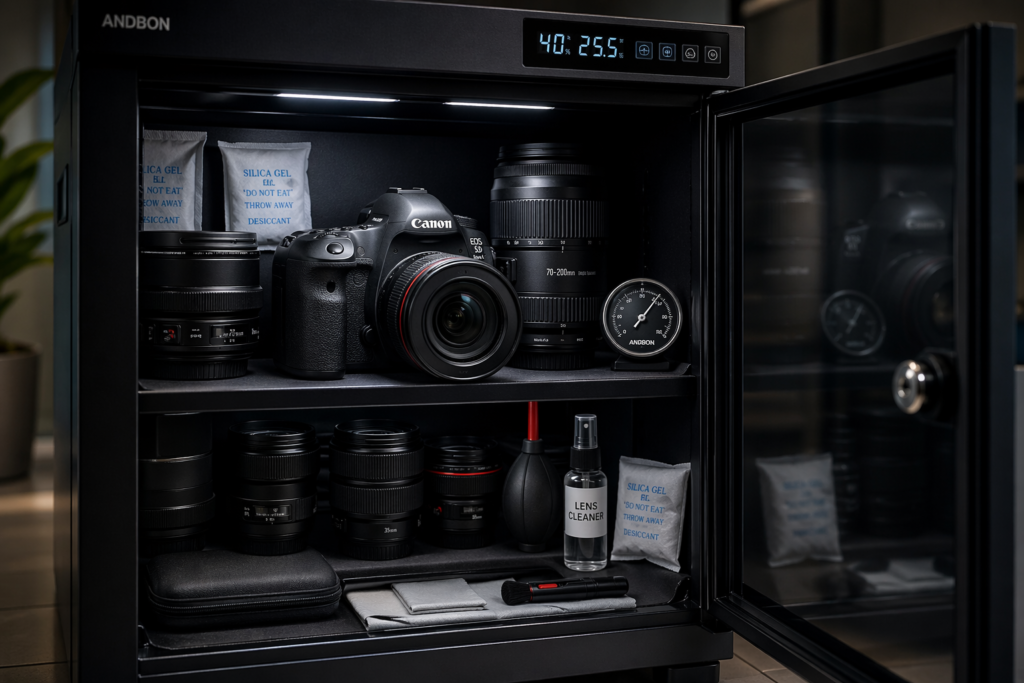
Temperature Control
Maintaining a stable temperature is crucial. We recommend storing cameras in an environment between:
- 10°C to 24°C (50°F to 75°F)
Avoid placing cameras in areas prone to extreme heat or cold, such as attics, cars, or near windows. Sudden temperature changes can cause internal condensation, damaging sensitive components.
Humidity Management
Humidity is one of the biggest threats. The ideal humidity level for storing cameras is:
- 30% to 50% relative humidity
High humidity encourages fungus growth, while extremely low humidity can dry out lubricants. Using silica gel packets or dehumidifiers helps maintain optimal moisture levels. Storing Camera
Lorem ipsum dolor sit amet, consectetur a
Summer Storage
Humidity is higher → use more silica gel
Heat is higher → never store in car or attic
Check dry box every 2 weeks
Winter Storage
Cold temperatures → let camera warm up slowly before use
Condensation risk → use sealed plastic bag method
Low humidity (good) but don’t let it drop below 30%
dipiscing elit. Ut elit tellus, luctus nec ullamcorper mattis, pulvinar dapibus leo.
Best Storage Solutions for Cameras
1. Dry Cabinets for Professional Protection
A dry cabinet is one of the most effective solutions for storing cameras. These cabinets:
- Maintain controlled humidity levels
- Protect against dust and fungus
- Provide organized storage for multiple accessories
We consider dry cabinets essential for photographers in humid climates.
2. Airtight Storage Containers
For budget-friendly alternatives, we recommend:
- Airtight plastic containers
- Adding silica gel packs inside
- Keeping equipment sealed when not in use
This method significantly reduces moisture exposure.
3. Camera Bags with Protective Padding
High-quality camera bags offer:
- Shock absorption
- Dust protection
- Compartmental organization
Ensure the bag is stored in a dry, cool place and not left sealed with moisture inside.
How to Prepare Your Camera Before Storage
Clean Your Camera Thoroughly
Before storing, we always:
- Remove dust using a blower
- Wipe surfaces with a microfiber cloth
- Clean lenses with proper lens solutions
Clean equipment minimizes the risk of long-term damage.
Remove Batteries
Batteries should never be left inside the camera during long storage periods. This prevents:
- Leakage
- Corrosion
- Internal circuit damage
Store batteries separately in a cool, dry place.
Detach Lenses
Separating lenses from the camera body helps:
- Reduce stress on the mount
- Prevent internal pressure damage
Always cover both ends with protective caps.
If You Only Remember 3 Things:
Control humidity – Keep it between 30–50%
Remove the battery – if storing for more than 2 weeks
Use silica gel – always, everywhere, every time
A $200 dry cabinet is cheap compared to replacing a $2,000 lens or a $3,000 camera.
Don’t be the person who learns this lesson the hard way.
Proper Lens Storage Techniques
Lenses require special attention due to their glass elements.
Use Lens Caps and Filters
We ensure both front and rear caps are securely attached. Adding a UV filter provides extra protection.
Store Vertically or Horizontally
- Vertical storage reduces pressure on internal elements
- Horizontal storage is acceptable if properly cushioned
Avoid stacking lenses directly on top of each other.
Avoiding Common Camera Storage Mistakes
Cars experience extreme temperature fluctuations that can damage:
- Sensors
- Batteries
- LCD screens
2. Storing in Damp Areas
Basements or bathrooms often have high humidity levels, increasing fungus risk.
3. Ignoring Regular Maintenance
Even when stored, cameras should be checked periodically. We recommend:
- Turning the camera on once every few weeks
- Inspecting for dust or moisture
Long-Term Storage Tips for Cameras
When storing cameras for extended periods, we follow these advanced techniques:
Use Anti-Fungal Solutions
Placing anti-fungal strips or silica gel packs helps prevent mold growth.
Vacuum-Sealed Bags (With Caution)
Vacuum sealing can protect against moisture but must be done carefully to avoid pressure damage.
Keep Documentation and Accessories Organized
Store:
- Memory cards
- Chargers
- Cables
in labeled compartments for easy access.
Digital Storage Considerations
Camera storage isn’t just physical—it includes digital assets too.
Backup Your Photos
We always maintain:
- External hard drives
- Cloud storage backups
Format Memory Cards Before Storage
Formatting ensures cards remain functional and free of corrupted files.
Travel vs. Home Storage Strategies
At Home
- Use dry cabinets or airtight containers
- Maintain consistent environmental conditions
During Travel
- Use weather-resistant camera bags
- Carry silica gel packets
- Avoid exposing gear to sudden climate changes
Professional Storage for High-End Equipment
For professionals, investing in dedicated storage systems is essential. These include:
- Climate-controlled cabinets
- Fireproof safes
- Anti-theft storage units
Such solutions provide maximum security and environmental stability.
Maintenance Routine for Stored Cameras
We recommend a monthly routine:
- Power on the camera
- Check battery condition
- Inspect lenses for fungus
- Clean external surfaces
Regular maintenance ensures readiness and prevents degradation.
Conclusion: Ensuring Longevity Through Smart Storage
Proper camera storage is not optional—it is a necessity for preserving performance and value. By implementing controlled environments, protective storage solutions, and regular maintenance, we ensure that our cameras remain in optimal condition. Whether using a professional dry cabinet or a simple airtight container, the key lies in consistency and attention to detail. With these expert strategies, we safeguard our investment and maintain the quality of every shot we capture.
Pingback: Make A Aable Comparing Memory Foam Vs Hybrid Mattresses -1