
Woofer: The Ultimate Guide to Deep Bass and Better Sound
Let’s Start With the Basics
If you listen to music, watch movies, or set up a car audio system, you have probably heard the word “woofer” many times. But do you really know what a woofer does and why it is one of the most important parts of any audio setup?
Most people think a woofer simply “adds bass.” The truth goes much deeper than that. A good woofer can completely change your listening experience — it gives sound a sense of depth, weight, and emotion that small speakers can never deliver on their own.
In this article, we will look at the woofer from every angle — in plain, simple English, without confusing technical jargon. Whether you are building a home theater, upgrading your car audio, or just want better sound from your music system, this guide is written for you.
What Exactly Is a Woofer?
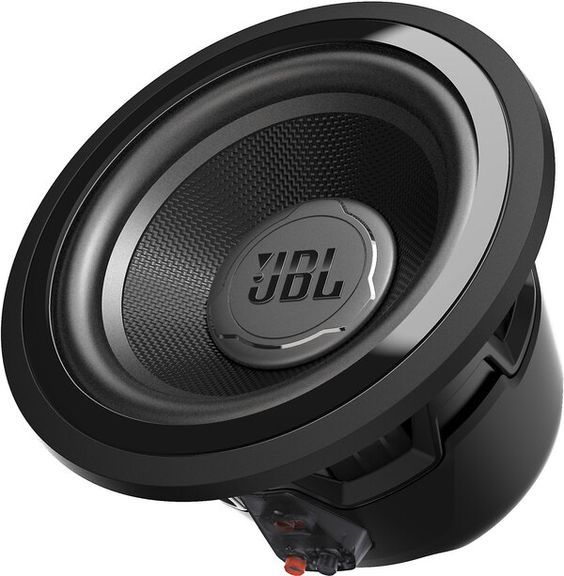
Let’s put it simply: a woofer is a specialized speaker driver built to reproduce low-frequency sounds — the deep, heavy notes you feel as much as you hear. It typically covers the range from about 20 Hz up to 500 Hz.
The name comes from the deep “woof” sound these drivers produce when they play bass. Working together with other speakers — a tweeter for high frequencies and a mid-range driver for the middle — the woofer completes the full sound spectrum.
One important thing to understand here: a woofer does not just create sound, it moves air. And that moving air is what makes you feel the bass — like when a cinema seat shakes during an explosion. That physical sensation is the woofer’s gift.
How Does a Woofer Work?
Now let’s get slightly technical, but in a very simple way.
Inside a woofer, there is a voice coil sitting inside a magnet. When the amplifier sends an electrical signal, current flows through the voice coil. That current interacts with the magnet’s field and creates a force, which makes the coil move back and forth.
Attached to the coil is the cone — the round part you see on a speaker. When the coil moves, the cone moves too, and the cone pushes the air. That push of air reaches your ears as bass.
That is basically it. No magic — just physics. But the engineering hidden inside this simple process is what separates an ordinary speaker from a truly great woofer.
What’s Inside a Good Woofer?
Every woofer is made of a few key parts. Knowing them matters because when you shop, you will know exactly what to look for.
Cone (Diaphragm): The round surface that produces sound. It can be made from paper, plastic, fiber, or metal. A good cone is both light and rigid so the sound stays clean.
Surround: A flexible ring at the edge of the cone that connects it to the frame. Usually made of rubber or foam. It lets the cone move freely while keeping it controlled.
Spider: A corrugated part inside that keeps the voice coil centered. It also helps the cone return to its resting position after each movement.
Voice Coil: A coil of wire sitting in the magnetic gap. This is what converts the electrical signal into movement.
Magnet: A permanent magnet that creates the magnetic field. Ferrite and neodymium are common — neodymium is stronger and lighter.
Frame (Basket): The structure that holds everything in place. A rigid frame is essential so nothing shifts out of alignment.
Types of Woofers — Which One Is Right for You?
The market offers many kinds of woofers, and each one has its own purpose. Let’s break them down.
1. Standard Woofer
This is the most common type, found in bookshelf speakers, tower speakers, and general audio systems. It handles both bass and lower mid-range. For listening to music at home, a standard woofer is usually more than enough. If your budget is limited and you just want good-quality music, speakers with a standard woofer are a great first choice.
2. Subwoofer
A subwoofer is built only for the deepest frequencies — below 200 Hz, often down to 20 Hz. It comes in its own enclosure and usually has its own amplifier. In home theater, its importance is unmatched, because movie explosions, helicopter sounds, and background rumble are all delivered by the subwoofer.
3. Mid-Woofer
A mid-woofer is the bridge between bass and mid-range. It covers roughly 200 Hz to 5 kHz. It is very common in compact speakers, soundbars, and car audio where space is limited. Its bass is not as deep as a subwoofer’s, but for compact systems it is an excellent compromise.
4. Rotary Woofer
This is a completely different technology — instead of a cone, it uses a set of fan blades that rotate according to the signal. It can produce frequencies below 20 Hz. However, it is very expensive and rare, found only in specialized high-end installations. For the average user, it is not practical.
Woofer vs. Subwoofer — Clearing Up the Confusion
Many people use these two words interchangeably, but they do different jobs.
A woofer is a general low-frequency driver that handles bass and lower mid-range. It is usually built into the main speaker cabinet.
A subwoofer is built only for the deepest frequencies — the part a regular woofer cannot deliver. It is a separate unit, often with its own amplifier.
A simple example: if your main speakers are good quality and you only listen to music, you may not need a subwoofer at all. But if you want home theater or you love bass-heavy music, a subwoofer changes the game.
What to Look for When Buying a Woofer
When you go shopping, pay attention to these specifications:
Frequency Response: Tells you how deep the woofer can go. The lower it reaches, the better bass you get.
Power Handling (RMS): How much continuous power it can handle. It must match your amplifier — too much power can burn the woofer.
Impedance (Ohms): 4Ω or 8Ω for home audio, 2Ω or 4Ω for car audio. It must match your amplifier or you risk damage.
Sensitivity (dB): How easily it produces sound. A more sensitive woofer performs well even with less power.
Size: From 4 inches to 18 inches. A bigger woofer gives more bass but needs more power and a bigger box. In a small room, smaller is often better.
How to Choose the Right Woofer for Your Needs
Everyone’s needs are different. Let’s see which category you fall into.
If you only listen to music: Good-quality speakers with a standard woofer are enough. If you enjoy bass-heavy genres (electronic, hip-hop), add a subwoofer with a sealed enclosure — its bass is tight and accurate.
If you are building a home theater: A ported (bass reflex) subwoofer is better. It gives more output and is perfect for movies. A 10-inch or 12-inch subwoofer works well for most homes.
If you are setting up car audio: Keep space in mind. Choose a compact subwoofer or mid-woofer. A dual voice coil subwoofer gives you wiring flexibility. Impedance matching is the most important thing in car audio.
Room size also matters: In a small room, too much bass can be overwhelming. In a large room, you will need a more powerful subwoofer to fill the space.
Installation and Placement — Small Things, Big Difference
Even a great woofer can sound bad if placed wrong. A few tips:
The enclosure must be correct: Every woofer is designed for a specific box volume. Follow the manufacturer’s recommendation, or the bass will become boomy or weak.
Placement matters: Corner placement boosts bass. Mid-wall placement smooths the response. Every room is different — experiment a little.
Crossover setting: Set the crossover frequency to blend the subwoofer with your main speakers. 80 Hz is a common starting point, but adjust it to your system.
Vibration control: Use isolation pads to separate the subwoofer from the floor — this reduces rattles and keeps the sound clean.
Common Misconceptions
“Bigger is always better.” No. A bigger woofer gives more bass but needs more power and space. In a small room, a smaller one can do a better job.
“More watts means more bass.” Wattage is only one factor. Sensitivity, enclosure, and design matter just as much.
“A subwoofer is only for movies.” Wrong. In music too, a subwoofer takes the load off your main speakers, which makes the sound cleaner.
“Woofer and subwoofer are the same thing.” No. A subwoofer is a special type of woofer, but not every woofer is a subwoofer.
Final Thoughts
A woofer is not just a speaker — it is the foundation of your audio experience. The depth of your music, the impact of your movies, and the thrill of your games all come from this small component.
Now that you know all about woofers, you can make a better decision. Whether you are building a home theater, upgrading your car sound, or simply want more enjoyment from your music, choosing the right woofer is a smart investment.
And remember: good sound is not just heard — it is felt. And that feeling starts with the woofer.